

The Spec Sheet
- Standard Framing Depth: 24 inches
- Absolute Minimum Depth: 22 inches (Tolerance: +0 / -0 inches—any less and hangers physically will not fit)
- Standard Hanger Width: 17 to 19 inches
- Overhead Shelf Depth: 12 to 14 inches
Most people grab a tape measure, look at an empty wall, and guess. This usually results in hanging a shirt, closing the door, and watching the door aggressively scrape the shoulder off a jacket.
Closet depth isn’t subjective; it is dictated by the physical size of standard hangers and the hardware you install to close the space. Here is the exact math to get it right the first time.
Why 24 Inches is the Industry Standard
A standard adult clothes hanger from places like The Container Store or IKEA is typically 17 to 19 inches wide.
Once you put a heavy winter coat, a suit jacket, or a thick sweater on that hanger, the overall width easily swells to 21 or 22 inches. The 24-inch standard framing depth exists to give you 2 inches of breathing room. It ensures your clothes hang straight and nothing gets crushed when the doors slide shut.
How Door Types Change Your Required Depth
The Contractor Trap You frame a perfect 24-inch deep closet. You install standard 12-inch shelves and a hanging rod. Then, you decide to install sliding bypass doors. Bypass door tracks take up 3 to 4 inches of internal framing space. Suddenly, your 24-inch closet only has 20 inches of usable clearance. Your clothes are now acting as a brake pad for your sliding door.
If you are framing a new space, you must calculate your depth after accounting for the door hardware.
Standard Hinged Doors
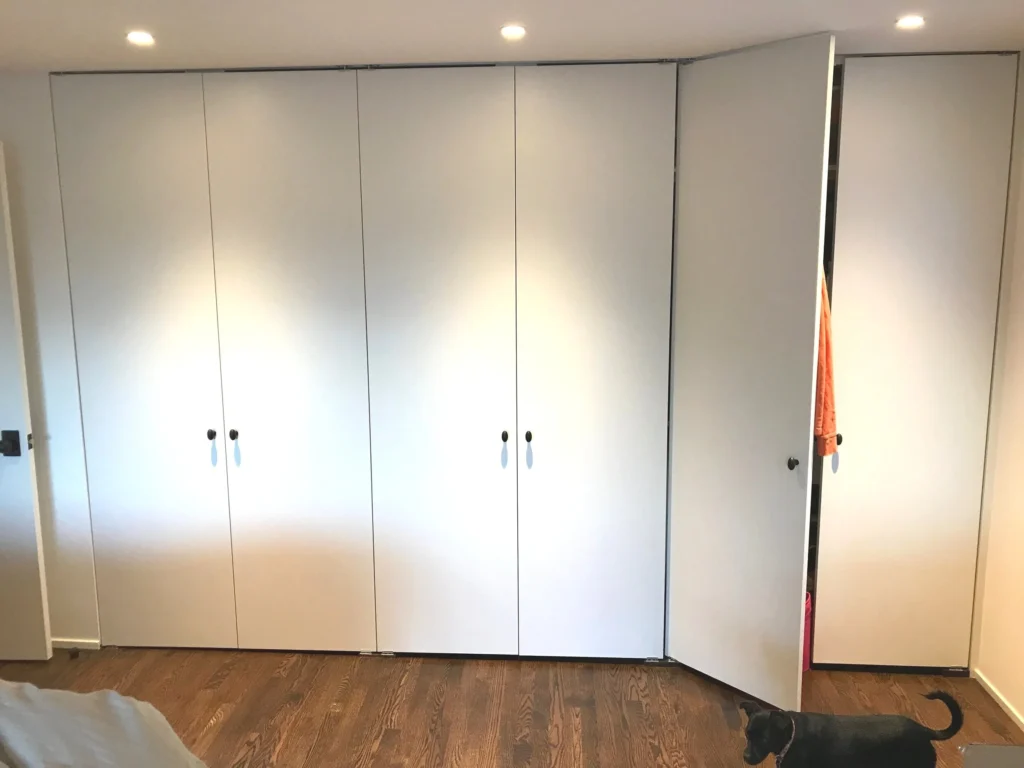
These open outward into the bedroom. They require zero internal track space. If you have standard hinged doors, your framing depth is your exact usable depth. This is the gold standard if you have the room clearance to swing a door open.
Bifold Doors
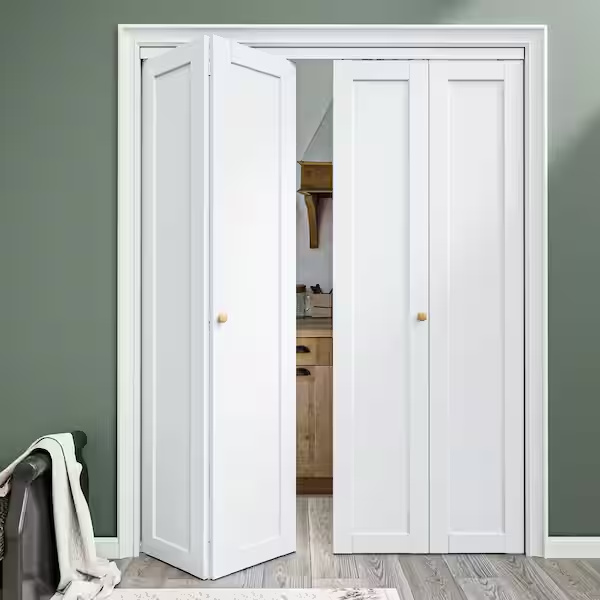
Bifolds sit inside the door frame and require a top track. You need to deduct about 2 inches from your internal depth to accommodate the track and the physical accordion fold of the doors. If you are building for bifolds, frame the closet at 26 inches deep to maintain 24 inches of clearance.
Sliding / Bypass Doors

These require a double track system so one door can slide behind the other. You must deduct 3.5 to 4 inches from your usable depth. A standard reach-in closet built for sliding doors should be framed at 28 inches deep.
The “Absolute Minimum” (When You Have Less Than 24 Inches)
If you live in an older home or you are squeezing a reach-in closet under a staircase, you might only have 20 or 21 inches of total depth.
Do not install a standard horizontal closet rod. If you do, the hangers will hit the back wall and sit at a crooked 45-degree angle. Instead, use forward-facing pull-out valet rods.
These mount to the underside of a shelf and pull straight out toward you. You hang the clothes cascading front-to-back instead of side-to-side. It limits capacity, but it completely bypasses the 24-inch rule.
Shelf Depth vs. Framing Depth
A common DIY mistake is assuming that because the closet is 24 inches deep, the wooden shelves inside should also be 24 inches deep.
If you install a 24-inch deep shelf directly above a hanging rod, you will never be able to comfortably reach the hangers. Even worse, anything you push to the back of that overhead shelf belongs to the void now; you will forget it exists.
- Top Shelves: Keep them between 12 to 14 inches deep (Tolerance: +/- 1 inch).
- Shoe Shelves: Keep them at 12 inches deep.
This leaves 10 to 12 inches of empty air in front of the shelves, allowing you to easily lift items on and off the hanging rod below.